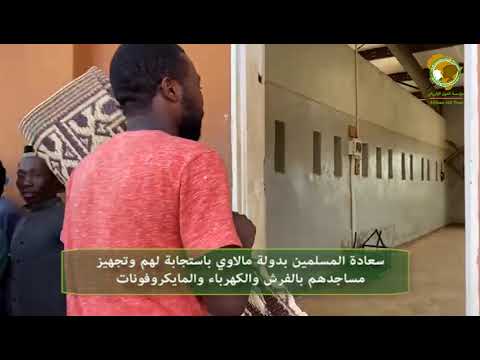
Building relief homes is of great importance in providing support to those affected by disasters and crises, as it provides them with safe shelter.Providing a healthy educational environment for children, as providing suitable housing for children contributes to improving their physical and psychological health, and helps them focus. in their education and practice
the details
The total area of the mosque is 390 m². Construction of brick and cement and concrete roof Foundation: Excavation is carried out to a maximum depth of 1.5 m from the floor foundation level or until the rock and foundation are reached. It consists of armed bases with an average base area of 1.4 * 1.2 and a depth of 40 cm before implementation. Reinforced foundations: 10 cm of clean brush is applied to the wall base and the bottom of the foundations. Secondly, the columns: 37 columns will be implemented for the entire area of the mosque, with dimensions of 40*25 cm for the external columns and 40 Poison for internal columns with Phi 16 reinforcement Walls: The walls are built with blocks, with a wall width of 20 cm. Implementation of the concrete slab from reinforced concrete with Y12 reinforcement, 16-meter beam, and 25-meter width cm and a depth of not less than 40 cm Finishing: Plastering: The entire mosque will be plastered inside and out according to the agreed-upon proportion. Ceramic tiles for the entire project flooring, size 40cm*40cm used Turn off the electricity, making sure that the plug is placed only in the microphone location, and that a light is placed in each panel. Build a lighthouse no less than 8 meters high. Rainbow paints are applied on three coats. The windows are made of aluminum, with the window size being 1.5 x 1.5 cm wide.
the details
The total area of the relief houseis35m² (+External bathroom with an area of1.5*1.5The house contains two rooms, a hall, and a veranda used as a kitchen.Theconstruction is made of brick and cement, and the roof is made of zinc. The footingis madeof10 cm thick concreteon the bottom of the excavationfloor. The construction is done using solid clay bricks with a wall thickness of13cmand a foundation height of no less than80cm depending on the type of soil and slope. All necessary measures are taken to avoid harmful insects and the damage they cause to the safety of the facility in the long term by using medication and chemicals in the layer. The basis. Backfilling and leveling:The foundation is backfilled, leveled, and a strong replacement soil is created and compacted well. )(Concrete over the replacement soil with a floorslab thickness of 10cm and use the insecticide again. Structural structure:The room walls are built from solid clay bricks, with a wall thickness of9cm, up to the upper level of the window. The waist is made of reinforced concrete with a thickness of20cm around the entire room. It is used for its structural importance in transferring and distributing loads, connecting walls, providingthe necessary support and balance, and as a threshold for doors and windows.The average height of the building is approximately 3.8m. For ceilinguse,musk wood is used to makeceiling trusses (Pin Wood- hard wood) . A type of paintusingwood insulation(Solignum)that resists wood corrosion and protects it from moisture and heat. Covering is done using zinc sheets. Tests are conducted to ensure that there are no leaks and to check the slope of rainwater drainage. Finishing:The entire room is covered with white plaster, with a mixture of white plaster andpaintingon the outside of the block. Interior and exterior painting is done using oil paint or sealer in the case ofpainting using Rainbowpaint . To close and open windows
the details
The total area of the relief houseis36m²(+ an internal bathroomarea. The house contains two rooms, a hall, and a kitchenof 1.5*1.5). Construction of brick and cement and zinc roof The footingis madeof10 cm thick concreteon the bottom of the excavationfloor. The construction is done using solid clay bricks with a wall thickness of13cmand a foundation height of no less than80cm depending on the type of soil and slope. All necessary measures are taken to avoid harmful insects and the damage they cause to the safety of the facility in the long term by using medication and chemicals in the layer. The basis. Backfilling and leveling:The foundation is backfilled, leveled, and a strong replacement soil is created and compacted well. )(Concrete over the replacement soil with a floorslab thickness of 10cm and use the insecticide again. Structural structure:The room walls are built from solid clay bricks, with a wall thickness of9cm, up to the upper level of the window. The waist is made of reinforced concrete with a thickness of20cm around the entire room. It is used for its structural importance in transferring and distributing loads, connecting walls, and providing support and balance. Necessary and as thresholds for doors and windows as well The average building height is approximately 3.8m. For ceilinguse,musk wood is used to makeceiling trusses (Pin Wood- hard wood) . A type of paintusingwood insulation(Solignum)that resists wood corrosion and protects it from moisture and heat. Covering is done using zinc sheets. Tests are conducted to ensure that there are no leaks and to check the slope of rainwater drainage. Finishing:The entire room is covered with white plaster, with a mixture of white plaster andpaintingon the outside of the block. Interior and exterior painting is done using oil paint or sealer in the case ofpainting using Rainbowpaint . To close and open windows